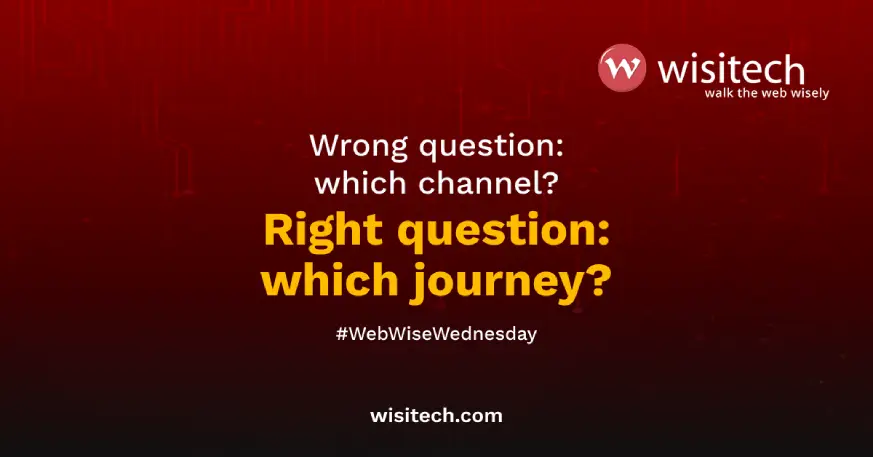
It’s one of the first questions businesses ask when they begin thinking about marketing. Should we invest in SEO? Is Google Ads better than Meta? Does LinkedIn work for B2B? Should we be creating short-form videos?
These questions are understandable, but they often assume that success comes from choosing the right platform. In reality, marketing channels are only one part of the equation. The more important question is how your customers discover businesses like yours, evaluate their options, and eventually decide whom to trust.
Once you understand that journey, the conversation changes. Instead of asking which channel works best, you begin asking which channels help your customers move from awareness to confidence.
This is something I have watched play out in our own business. Over 27 years, no single channel explains where our clients came from. Referrals and word of mouth built trust before the first conversation ever happened. SEO made sure we were findable once someone started looking. More recently, a client found us through ChatGPT, before Google ever entered the picture. Regular content on our blog and social media reinforced that trust throughout and brought in inquiries of its own.
It is easy to assume that consistent growth requires chasing the next platform or tactic. Our experience says otherwise. Referrals earned the trust. Search made us visible. AI platforms are starting to as well. Content held the story together. None of it worked alone, and none of it needed to.
1. Every channel plays a different role
A common reason businesses become disappointed with marketing is that they expect every channel to do everything. They want social media to generate leads, SEO to deliver immediate inquiries, email campaigns to create awareness, and paid advertising to build long-term trust.
In practice, each channel serves a different purpose because customers use them differently.
Someone searching for an emergency electrician is looking for an immediate solution. Google Search becomes the obvious choice because the need is urgent.
Someone comparing service providers for a larger project is making a slower decision. They may read a few pages, look at past work, check reviews, and think it over before reaching out.
The marketing channel didn’t create the demand. It simply met the customer where they already were.
2. Think in journeys, not channels
One of the biggest shifts in marketing over the last decade is that people rarely buy after a single interaction. They move between platforms depending on what they need at that stage of their decision.
A prospect might discover your business through Google, visit your website, return a week later after seeing one of your posts, read a case study, check your reviews, and only then decide to get in touch. None of those touchpoints worked in isolation. Together, they reduced uncertainty and built confidence.
This is why asking which marketing channel works best often leads to the wrong answer. The real objective isn’t to find one winning channel. It’s to create a connected experience across the channels your customers naturally use throughout their buying journey.
3. Build your strategy around your customers
The businesses that see the strongest results usually begin with a different set of questions. They try to understand where customers first become aware of a problem, where they look for information, who influences their decisions, and what gives them the confidence to move forward.
When those answers become clear, choosing the right marketing channels becomes much easier. Instead of chasing every new trend, you invest in the places that genuinely influence customer decisions.
Marketing becomes more consistent, budgets become more focused, and every channel begins supporting the others instead of competing with them.
3 questions to reflect on
- Where do your customers first discover businesses like yours?
- Which touchpoints influence them before they reach out?
- Are your marketing decisions driven by customer behavior or industry trends?
The strongest marketing strategies don’t begin with platforms; they begin with understanding how people make decisions.
If this raised questions about your own marketing strategy, we are happy to take a look.