
Website security is no longer optional; it’s a business necessity. Even if your website doesn’t store sensitive customer data, it can still be a target for hackers.
Many cyberattacks are not about stealing data. Hackers often aim to gain control of your server to send spam emails, distribute malicious files, run botnet attacks, or mine cryptocurrency. These activities can damage your brand reputation, reduce website performance, and even get your domain blacklisted.
If you’re investing in web development services, security should be a core part of your strategy, not an afterthought.
Here are five proven and evergreen security practices to protect your website.
1. Keep your software up to date
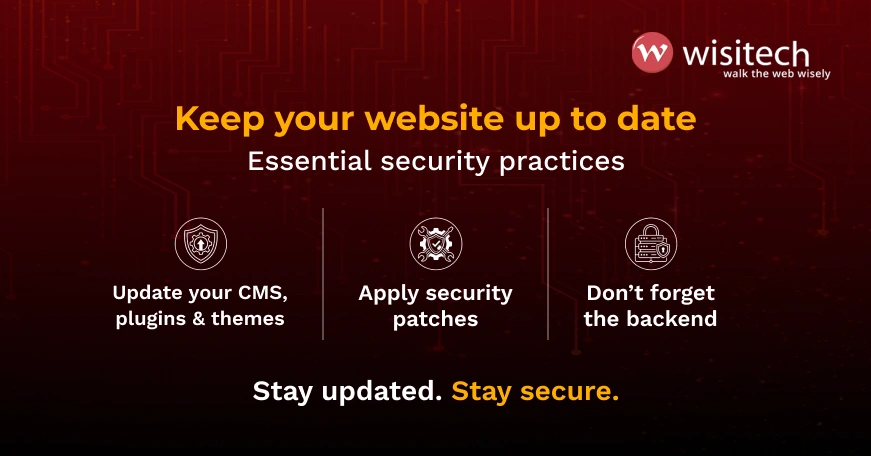
Outdated software is one of the most common entry points for hackers. Whether your website runs on WordPress, WooCommerce, or any custom framework, regular updates are essential.
Updates often include security patches that fix vulnerabilities before attackers can exploit them. This applies not only to your CMS but also to plugins, themes, and server environments.
If you’re using custom web development services, keeping your backend framework updated also improves performance and long-term stability.
2. Protect your website from SQL injection
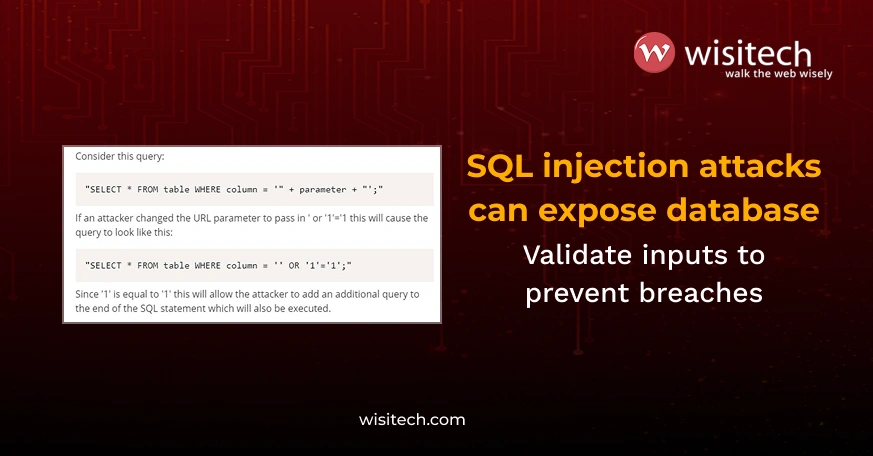
SQL injection remains one of the most widely used attack methods. It involves inserting malicious SQL code into input fields or URLs to manipulate your database.
This can result in data theft, data loss, or unauthorized access to sensitive information.
To prevent SQL injection:
- Use parameterized queries
- Validate and sanitize all user inputs
- Limit database permissions
Modern development practices and secure coding standards significantly reduce these risks. Businesses investing in professional custom web portal development benefit from built-in protection against such vulnerabilities.
Build a secure and scalable website with expert developers
Security should be part of your website from day one, not an afterthought.
3. Watch out for XSS (cross-site scripting) attacks
Cross-site scripting (XSS) attacks inject malicious scripts into web pages, often through user inputs like comments or forms.
These scripts can steal user data, hijack sessions, or redirect users to harmful websites.
To mitigate XSS risks:
- Escape and sanitize all user-generated content
- Use secure frontend frameworks
- Implement proper input validation
Modern frameworks offer built-in protections, but improper implementation can still leave gaps. That’s why secure coding practices are critical.
4. Limit information exposure through error messages
Detailed error messages may help developers, but they can also help attackers.
Displaying sensitive technical details such as database queries, API keys, or server paths gives hackers valuable insights into your system.
Instead:
- Show generic error messages to users
- Log detailed errors on the server side
- Restrict access to logs and sensitive data
This simple practice reduces the chances of attackers identifying vulnerabilities.
5. Apply both client-side and server-side validation
Relying only on client-side validation is not enough. Attackers can bypass browser-based checks easily.
A secure website uses both:
- Client-side validation for better user experience
- Server-side validation for actual security enforcement
This layered approach ensures that malicious inputs are detected and blocked before they can cause damage.
If you’re working with experts in PHP development services, proper validation frameworks are typically integrated into the development process.
Why website security should never be overlooked
A compromised website doesn’t just affect your data, it affects your business credibility, customer trust, and revenue.
From slow performance to blacklisting on search engines, the consequences can be long-lasting. Investing in secure web development practices from the start helps you avoid costly fixes later.
Secure your website before problems arise
Don’t wait for a breach to take action. Build your website with security at its core.