
Local visibility has always been a mix of maps, citations, and the right on-page signals. Today, that landscape is changing again: AI systems such as ChatGPT, Perplexity, and Google’s AI Overviews are being used as answer engines that read, summarize, and surface content directly to users. If you provide local SEO services for small businesses, you must add another layer to your strategy, one that makes your content extractable and cite-worthy for generative models. This post explains how to adapt, with Wisitech’s practical insights and tactical templates you can apply right away.
Search is evolving beyond rankings.
Wisitech builds SEO strategies designed for AI overviews and answer engines.
What is “AI-powered search” and how is it different?
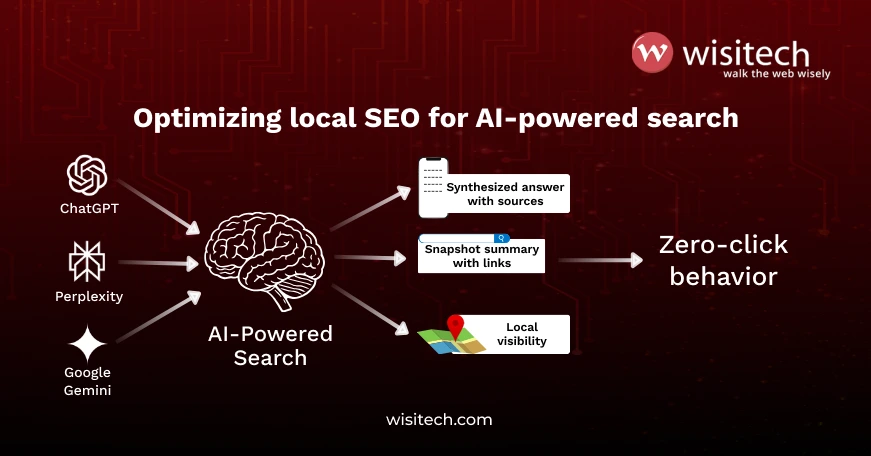
AI-powered search (the systems people now call answer engines or generative search) doesn’t just list links, it synthesizes answers from sources and returns concise summaries or recommendations. Google’s AI Overviews give snapshot summaries with links; ChatGPT and Perplexity can retrieve documents, synthesize them via retrieval-augmented workflows, and return a direct answer with source attributions. These systems value clarity, structure, and reliable signals that let them confidently cite your page when answering user questions.
Why local small businesses can’t ignore AI answers
- Zero-click behavior is increasing: users get what they need from a single AI response rather than having to click through multiple steps.
- When an AI cites your business as the source for a local fact (hours, services, pricing), that becomes prime visibility.
- Local trust signals (reviews, up-to-date NAP, schema) now feed both map packs and AI answer selection.
Recent trend analysis shows volatility in AI Overviews coverage and a rapid expansion of where AI summaries appear, which means the opportunity (and the risk of being buried) is accelerating.
Core concepts: GEO, AEO, and our working definitions
- Generative Engine Optimization (GEO / generative engine optimization services): the set of tactics to make content extractable and synthesizable by generative models (clear answers, entity maps, Q&A blocks, sourceable claims).
- Answer Engine Optimization (AEO / answer engine optimization services): the narrower practice of optimizing content to become the cited answer in an AI response (short, precise answers, strong on-page E-A-T).
- In practice, these overlap; for local businesses, we combine GEO for discovery and AEO as the actual citation target.
How AI chooses content
AI answer engines prefer pages that are:
- Directly answerable – the answer appears near the top, with minimal fluff.
- Structurally scannable – headings, bullet lists, numbered steps, and short paragraphs increase extractability.
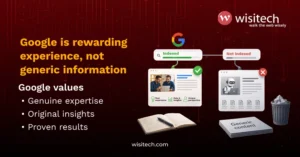
- Authoritative and current – clear authorship, dates, and factual signals like reviews and citations.
- Machine-readable – schema (structured data), clear HTML semantics, and downloadable resources that are easy to parse.
OpenAI’s and other providers’ recent updates emphasize retrieval and web search integration, meaning live, high-quality web pages are now being actively used to ground answers.
Wisitech helps structure SEO content so search engines and AI systems understand it the same way users do.
Actionable checklist: Structure your pages for SEO for AI-powered search
1. Lead with a short, one-sentence answer
Write a 15–30 word lead that directly answers the user’s likely question (example: “We fix blocked drains in under 90 minutes in [city], no callout fee on weekdays.”). Generative models love a crisp, high-signal opener because it’s easy to extract and cite.
2. Use explicit Q&A blocks and H2/H3 questions
Format common user queries as headings (e.g., “How much does drain cleaning cost in [city]?”) and answer them in 2–4 lines immediately below. This is the most reliable way to become an AI-included snippet.
3. Provide structured data
Add the LocalBusiness schema, the FAQ schema for the Q&A blocks, and the Offer or Service schema for pricing/options. Schema increases the chance of correct extraction and trustworthy citations.
4. Make facts sourceable
When you state numbers (e.g., average time to complete service, guarantees), back them with brief evidence, internal data lines, dated notes, or links to PDFs. AIs prefer verifiable claims.
5. Keep pages fast and mobile-first
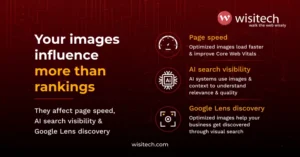
Speed matters: if a model’s extractor mismatches or times out, it may select a competitor. Fast pages increase the likelihood of being chosen as the citation.
6. Optimize for local entity signals
Consistent NAP across sites and directories, an up-to-date Google Business Profile, and local reviews with replies are signals that both search engines and answer engines use to determine locality and trust.
7. Provide downloadable, canonical assets
A clean PDF, CSV, or short whitepaper that summarizes your local service can be an authoritative asset that an answer engine cites. Keep them short and machine-readable.
Wisitech helps businesses restructure existing pages to be clear, extractable, and ready for AI-powered search.
How content types map to different engines
ChatGPT (and similar RAG systems)
These systems use retrieval (RAG) to fetch documents and then synthesize answers. They reward deep, factual pages with clear on-page citations and trustworthy off-page links. Ensure your content is accessible (not behind heavy JavaScript) so retrieval can succeed.
Perplexity
Perplexity emphasizes direct answers and source links; it has evolved to prefer publishers that permit fair usage and metadata that clarifies authorship. Recent product updates show stronger live-web retrieval for trending topics. If your local content references city rules, recent events, or up-to-date pricing, Perplexity may surface it quickly.
Google AI Overviews
Google creates snapshot summaries that mix algorithmic ranking with generative summaries. These overviews can replace the classic top-result view; having clear, authoritative content (including schema and trusted inbound links) improves the odds of inclusion. Keep an eye on changes, Google has been rolling and adjusting AI Overviews regionally.
Wisitech’s insights – what we test and recommend
At Wisitech, our AI-native SEO methodology focuses on how real users and AI systems discover and answer queries online – not just how pages rank traditionally. Wisitech’s approach prioritizes intent-driven content structures, advanced schema, and performance optimization so that content can appear in Google AI Overviews, ChatGPT responses, voice search, and other AI platforms – not just search results.
Wisitech begins by mapping your existing visibility across Google, AI Overviews, voice results, and conversational search platforms, identifying gaps where competitors are winning AI citations. Then, they help you package your answers into clear, AI-ready content that generative systems can parse and cite reliably.
Key tactics Wisitech applies include:
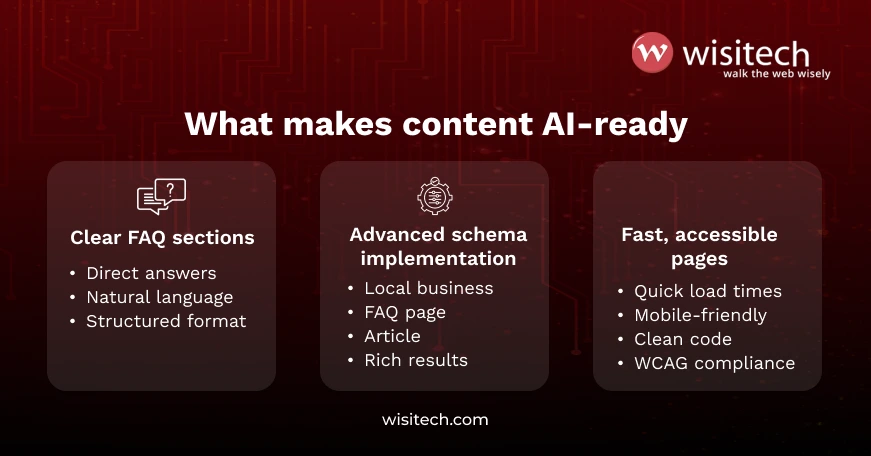
- Structuring FAQ sections and succinct answer blocks that mirror how AI assistants understand intent.
- Implementing the LocalBusiness schema and FAQ schema to help AI extract precise facts.
- Enhancing site performance and accessibility to improve how AI models retrieve and index your content.
This methodology helps your business not only rank but also become the source cited by AI systems when users request local answers.
Sample page template for a local service
(H1) [Service] in [City] – Fast, Local, Guaranteed
- 1-line lead answer (15 – 25 words)
- 3 bullets: price range, typical duration, core guarantee
(H2) How we fix [problem] in [City] – 2 – 4 line procedure (numbered steps)
(H2) Typical cost & what’s included – table + json-ld Offer schema
(H2) Frequently asked questions – FAQ schema with 8–10 Q&A pairs
(H2) Evidence & proof – short case study (dated), link to 1-page PDF
This layout prioritizes extractability and reduces ambiguity for AI extractors.
Wisitech builds extractable pages and schema setups that make you a go-to citation for ChatGPT, Perplexity, and Google AI Overviews.
Contact us to audit one page, we’ll show where AI will cite you (and where it won’t).
Measuring success for SEO for AI-powered search
Traditional KPIs still matter (organic traffic, conversions), but add these AI-specific signals:
- Citation frequency: how often an AI identifies your page as the source in simulated queries (track via monitoring tools that replicate AI prompts).
- Zero-click conversion lift: percentage of answer displays that lead to calls, bookings, or direct contact from the AI snippet.
- SERP ownership: Is your page present in the links that AI Overviews or answers reference?
Tools and manual checks can sample the AI responses (e.g., ask ChatGPT or Perplexity targeted local queries and note the source links). Over time, you’ll see which pages the answer engines prefer, and double down on those structures.
Common mistakes to avoid
- Hidden data behind JS widgets or forms (extractors skip them).
- Overly long intros; AI extractors prefer immediate answers.
- No structured data or outdated NAP info; these reduce trust.
- Using dense marketing language rather than factual, scannable content.
How Wisitech implements generative engine optimization services
Wisitech’s SEO practice integrates Answer Engine Optimization (AEO) as a core layer of modern SEO, an evolution of traditional strategies to meet AI-powered search behavior.
Instead of checklist-style SEO, Wisitech builds AI-compatible visibility by:
- AI Sentence-Level Content Structuring: Crafting content that directly answers natural language queries used in voice and AI search.
- Schema and Structured Data Implementation: Applying advanced schema markup so both search engines and AI answer engines understand key facts about your business (hours, services, location, pricing, etc.).
- Performance Optimization: Ensuring fast loading, mobile friendliness, and clean code, critical signals for AI systems.
- Integrated Analytics: Tracking not only traditional rankings but mentions and citations across AI platforms and voice search.
This blend of traditional SEO, structured data, generative engine optimization, and AEO helps local businesses appear where customers actually ask, whether that’s in a map pack, an AI summary, or a conversational answer.
Wisitech’s 90-day AI search recommendation
Wisitech’s approach to AI search success emphasizes continuous optimization rather than a one-time refresh. Their 90-day roadmap typically includes:
- Mapping current AI visibility and query coverage.
- Reformatting priority pages for generative AI extractability.
- Enhancing local signals, such as Google Business Profile and schema.
- Creating and tracking voice query coverage via conversational phrasing.
This phased strategy aligns your local SEO services for small businesses with generative search patterns, making your content not just visible but also cited across AI platforms.
Conclusion – adapt to be cited
The rise of answer engines means local businesses should treat pages not just as places for customers to land, but as documents for AI to read and cite. SEO for AI-powered search is not a replacement for classic SEO; it’s an evolution. By making your content short, structured, sourceable, and schema-rich, local small businesses can win citations in ChatGPT, Perplexity, and Google AI Overviews, and convert those citations into real customers.
Wisitech helps you stay visible by structuring SEO for how search works today, and where it’s heading next.