
Search for advice on running Google Ads, and you will find no shortage of “how much should I spend” articles, most repeating the same $1,000 to $10,000 a month range without explaining what that number actually pays for. Anyone researching Google Ads US small businesses 2026 need, whether that is a first campaign or a rescue of an account that has been quietly wasting budget for months, deserves more than a guess dressed up as a benchmark. This guide walks through what a real setup and management engagement covers: campaign structure, a verified fee model, audit criteria, and the actual choice between Search and Performance Max, grounded in how a certified Google Ads management company manages these accounts day to day.
What Google Ads US small businesses 2026 setup actually involves
A properly built account is not one campaign with a handful of keywords. It is a structure matched to how the business actually generates revenue, built by a team with active Google certification, not general familiarity with the platform. Certified specialists hold active credentials across Search, Shopping, and Display, and an official Google Partner status gives a Google Ads management company access to advanced tools, dedicated Google support, and beta features that non-Partner agencies do not get.
Campaign setup itself spans four formats depending on what the business sells: Search campaigns for high-intent keyword targeting, Shopping and Performance Max for ecommerce catalogs, and Local Services Ads for businesses generating calls, appointments, or map visibility. Which combination a store or service business needs depends entirely on the sales model, not a one-size-fits-all template.
Ecommerce and shopping ads
Ecommerce accounts need Shopping and Performance Max campaigns built around a well-structured product feed, not a boosted post treated like a search ad. That means optimizing the feed to compete against similar listings and using smart audience targeting to cut spend that never converts into a sale.
Local and B2B lead generation
Service businesses and B2B companies need a different setup entirely: intent-driven campaigns aimed at decision-makers, plus active management of Local Services Ads for maximum local visibility. The goal here is qualified calls and appointments, not raw click volume.
Account audits and rescue
Many small businesses do not start from zero. They start from an account that has been running for months with wasted spend baked into it. An audit reviews account structure, keywords, bidding strategy, Quality Scores, and conversion tracking to find exactly which keywords are draining the budget and which fixes would move the needle within 30 days.
Healthcare, finance, and legal PPC
Regulated industries carry an extra layer: campaigns have to clear Google’s advertising policies and approval processes for these categories while still targeting qualified prospects, which takes specific experience with how those approvals work, not just general PPC knowledge.
What Google Ads US small businesses 2026 management costs, exactly
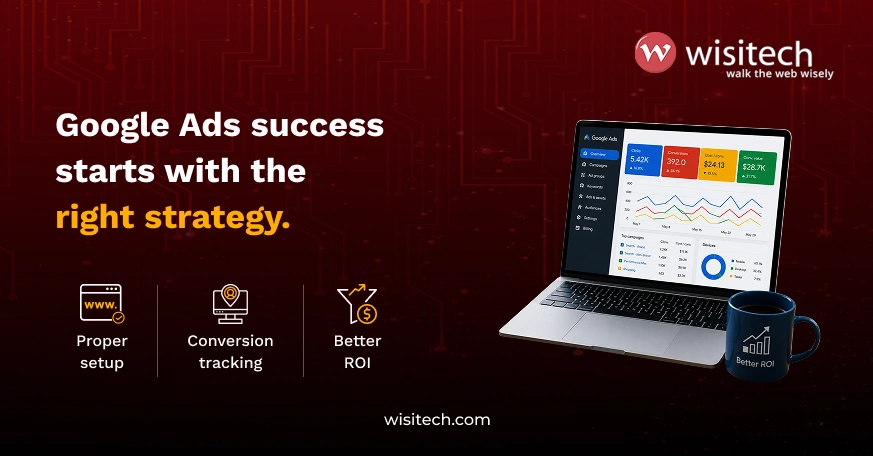
Pay Per Click management services pricing should be one of the easiest things for an agency to be transparent about, and most are not. Here is a structure that is: a management fee of 15% of monthly ad spend, a $1,000 per month minimum management fee, and a minimum recommended ad spend of $2,500 per month, on a month-to-month contract after a 90-day performance baseline.
That breaks down in practice like this: at ad spend under $2,500 a month, the $1,000 minimum management fee applies regardless of spend. Between $2,500 and $20,000 a month, the fee is 15% of spend, so $2,500 in ad spend plus a $1,000 management fee comes to $3,500 total monthly investment. Above $20,000 a month in spend, pricing moves to a custom quote since account complexity at that scale varies too much for a flat percentage to make sense.
The ad spend itself goes directly to Google on a card on file in the business’s own account. The management fee is billed on a separate invoice, so there is no markup blended into what Google charges and no guessing which invoice paid for what, one of the simplest tests for whether Pay Per Click management services are actually transparent.
Performance Max or Search: what actually decides it
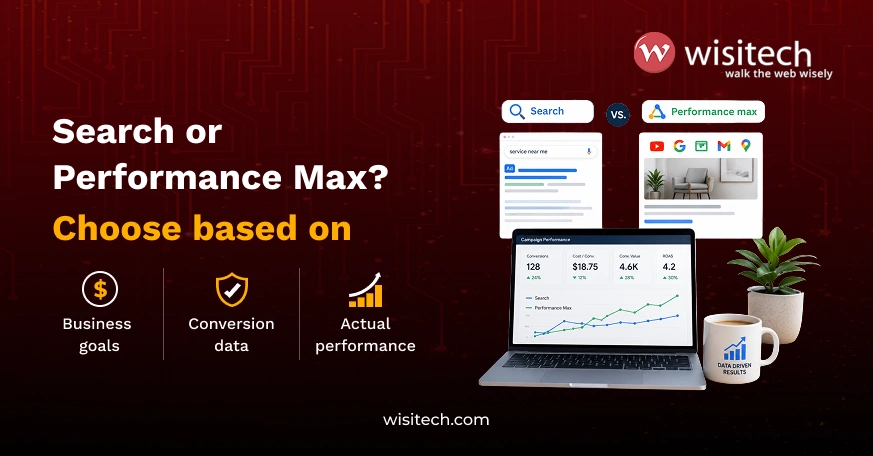
Google Ads optimization is not a one-time setup task; it is daily monitoring across keyword performance, bid strategy, ad copy testing, landing page alignment, audience signals, and campaign structure, with one goal: lower cost per acquisition and raise return on ad spend.
Inside that daily work, the Performance Max question comes up constantly, and the answer depends on the business, not a blanket recommendation. Ecommerce stores with strong existing conversion data tend to see Performance Max excel at product discovery, since Google’s AI has enough historical signal to learn from. Lead generation businesses with limited conversion history should start with Search campaigns instead, and only add Performance Max once the account has 50 or more conversions a month, otherwise the AI is learning from too little data and wastes budget in the process. Full asset optimization, audience signals, and conversion tracking all have to be in place before Performance Max is handed the wheel, not after.
What this looks like with a real account
QuickTrick Alignment, a manufacturer of portable wheel alignment kits selling across DIY, fleet, RV, and powersports buyer segments, needed a strategy that could reach each of those very different audiences at the right intent signal, not one generic campaign trying to speak to all of them at once. The work combined SEO, Google Ads, and conversion optimization, and the account is now in its ninth year of active management. QuickTrick ranks first on Google for its five most commercially important keywords and shows up in ChatGPT and Google Gemini results as well. As the brand’s CEO and co-founder Tess Winningham put it, the team has “been handling our web development, SEO, Facebook shopping catalog and more for years,” calling it a partnership she could not ask to be better.
That is what nine years of active management, rather than a one-time setup and walk away, actually produces: rankings that compound and visibility that extends into AI-generated answers, not just a paid click. It is also the clearest evidence that Google Ads optimization works best as a sustained practice rather than a campaign that gets tuned once and left alone.
Where this leaves your budget
Google Ads US small businesses 2026 decisions come down to three things: whether the campaign structure matches how the business actually sells, whether the management fee is separate and verifiable from ad spend, and whether someone is actively working the account daily rather than checking in once a month. A $1,000 minimum management fee on a $2,500 ad spend is a real, checkable number. A vague “it depends” is not.
If an existing account has not had an independent review, that is usually the fastest place to find out where budget is leaking before committing to anything new. Get a free Google Ads audit and see the exact keywords wasting spend, with results back within 48 hours, no obligation.