
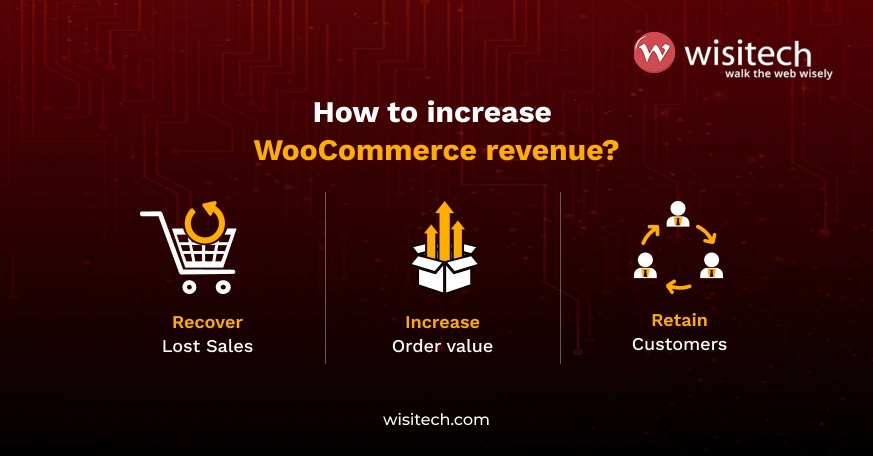
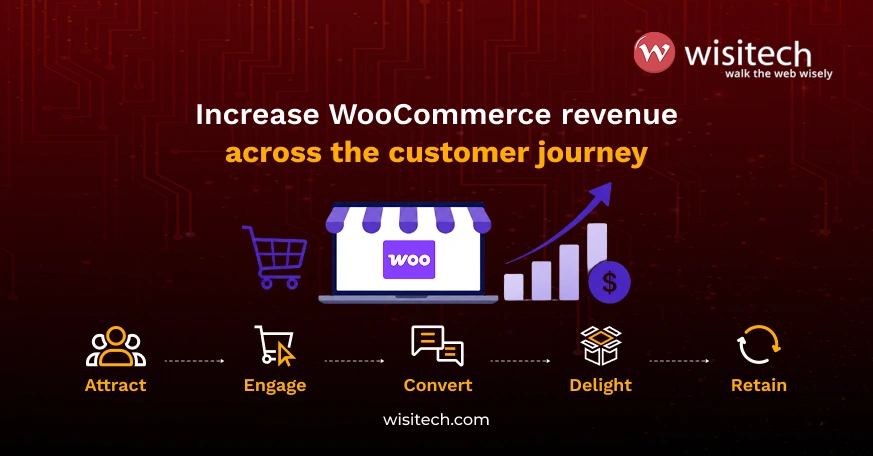
If you are running a WooCommerce store and want to know how to increase WooCommerce revenue without proportionally increasing your ad spend, you are asking the right question. Most store owners default to buying more traffic when sales plateau. The better approach is to extract more value from the traffic you already have, bring back the customers who already trust you, and build the structural improvements that make every dollar of acquisition spend work harder.
This guide covers the most effective answers to how to increase WooCommerce revenue in 2026, including two that were not practically viable three years ago. Whether you are a solo operator or working with a WooCommerce development company to scale, these strategies apply regardless of your store’s current size.
What does a high-performing WooCommerce store look like in 2026?
Before diving into strategies on how to increase WooCommerce revenue, understand where the benchmarks are. These are the performance levels that separate stores in the top 20% from the average.
| Metric | Average WooCommerce store | Top 20% of WooCommerce stores |
| Conversion rate | 2.5% | 4% to 6% |
| Cart abandonment rate | 70% to 75% | 55% to 62% |
| Repeat purchase rate | 20% to 25% | 40% to 50% |
| Average order value | $79 to $122 | $150+ |
| Email revenue share | 15% to 20% | 25% to 35% |
| Mobile conversion rate vs desktop | 40% to 60% lower | Within 20% |
Benchmarks sourced from WooCommerce industry data, Klaviyo ecommerce benchmarks, and Statista 2025/2026 reports.
1. Recover abandoned carts: the fastest way to increase WooCommerce revenue without more ad spend
Half of all WooCommerce stores do not have an active abandoned cart recovery system in place. This is the single largest revenue leak in ecommerce. The average WooCommerce cart abandonment rate is 70 to 75%. Recovery tools bring back 10 to 20% of those abandoned sessions. On a store processing $20,000 per month in completed orders, that represents $2,000 to $4,000 in additional monthly revenue from traffic that already came to your store and already added products to cart. This is the highest-ROI action available to most stores that want to increase WooCommerce revenue quickly.
How to implement abandoned cart recovery in 2026
- Email sequences: Send three emails: one at 1 hour post-abandonment (reminder with product images), one at 24 hours (light urgency), one at 72 hours (discount offer if appropriate). Klaviyo and Mailchimp both have direct WooCommerce integrations that trigger these automatically.
- SMS recovery: SMS abandoned cart recovery outperforms email recovery by 15 to 25% in click-through rate for US customers. Use a compliant opt-in during checkout to enable this channel.
- Browser push notifications: For guests who have not opted into email, push notifications using PushEngage or OneSignal recover a share of anonymous visitors who would otherwise be uncontactable.
- Exit-intent overlays: A well-timed exit-intent popup on the cart page with a specific offer (free shipping, 10% discount) reduces abandonment before it happens.
The key 2026 update: WooCommerce optimization for abandoned cart recovery now includes AI-driven send-time optimization in Klaviyo and Mailchimp that determines the optimal hour to send each recovery email per customer, improving open rates by 15 to 30% over fixed send times.
2. Implement upsell and cross-sell: add 10 to 30% to every order
One of the most data-backed answers to how to increase WooCommerce revenue per transaction is upsell and cross-sell. Adding this functionality increases revenue by 10 to 30% per order according to industry data. The mechanism is simple: show a higher-value alternative on the product page (upsell), and show complementary products on the cart page (cross-sell). Most stores leave this revenue uncaptured because the default WooCommerce upsell and cross-sell display is visually weak and poorly placed.
2026 best practices for WooCommerce upsell and cross-sell
- Product page upsell: Display the premium version or bundle within the product page, not in the sidebar. Frame it as an upgrade, not an alternative. Example: ‘Most customers who buy this also upgrade to the annual plan, which saves 30%.’
- Cart page cross-sell: The cart page is the highest-converting location for cross-sell offers. Show two to three complementary products, not ten. Fewer options, higher add rate.
- Checkout page order bump: A single checkbox offer on the checkout page with a clear micro-description converts at 20 to 35% for the right product. This is standard in high-performing US WooCommerce stores and underused by most.
- AI-powered recommendations: AI-driven recommendation engines (available via WooCommerce product add-ons or headless commerce integrations) can triple revenue per session according to 2026 industry data. For stores with 100 or more products, AI recommendations outperform manual upsell assignments significantly.
3. Launch a customer loyalty program: turn one-time buyers into repeat customers
WooCommerce stores with loyalty programs see a 2.7 times higher customer retention rate. Returning customers spend significantly more per transaction than first-time buyers. A loyalty program is one of the most reliable long-term ways to increase WooCommerce revenue. Understanding how to increase WooCommerce revenue through retention rather than acquisition is what separates stores that grow profitably from those that remain ad-dependent.
What makes a WooCommerce loyalty program work in 2026
- Point accumulation with clear value: Customers need to understand immediately what their points are worth. ‘100 points = $1 off your next order’ is clear. Vague multiplier systems create confusion and reduce program engagement.
- Tiered rewards: Bronze, Silver, Gold tier structures increase average order value because customers spend more to reach the next tier. Stores with tiered programs see 15 to 35% higher average order values from loyalty members.
- Birthday and milestone rewards: Automated birthday discounts and purchase milestone rewards (fifth order, $500 spent lifetime) drive purchases at moments of high emotional receptivity.
- Native integration vs plugin: With custom WooCommerce development services, you can build a loyalty program natively into your store rather than relying on a plugin that adds load time, subscription cost, and limited customization options.
4. Build a referral program: make your best customers your acquisition channel
Your existing customers already recommend your products to people they know. A referral program gives them a structure and a reward to do it more consistently. Referred customers have a 16% higher lifetime value than non-referred customers and convert at nearly twice the rate of cold paid traffic. For stores looking to increase WooCommerce revenue and learning how to increase WooCommerce revenue while reducing acquisition cost, a referral program is one of the most capital-efficient channels available.
How to structure a WooCommerce referral program that actually gets used
- Double-sided rewards: Give the referrer a reward and give the new customer a discount on their first order. Double-sided referral programs convert at significantly higher rates than single-sided ones because both parties have a reason to act.
- Frictionless sharing: One-click sharing to WhatsApp, Instagram, SMS, and email from a dedicated referral dashboard. The more friction between a customer wanting to share and actually sharing, the fewer referrals happen.
- Post-purchase trigger: The highest-engagement moment to present a referral offer is immediately after a successful purchase, on the order confirmation page, when satisfaction is at its peak.
- Reward clarity: Tell customers exactly what they earn and when. ‘Share your link. When a friend makes their first purchase of $50 or more, you get $10 store credit automatically.’ Vague reward structures produce low participation.
5. Offer personalized discounts and coupons at the right moment
When thinking about how to increase WooCommerce revenue without acquiring new customers, personalized discounts are one of the most effective conversion tools available. 91% of US shoppers are more likely to buy from a store that offers exclusive deals. But blanket discount campaigns train buyers to wait for sales and erode your margins over time. The 2026 approach to coupons and discounts is personalization: the right offer to the right customer at the right moment in their buying journey. WooCommerce custom development makes it possible to build dynamic discount logic directly into your store, so discounts are triggered by specific behaviors rather than sent to your entire list.
High-converting discount triggers for WooCommerce stores
- First-time visitor discount: A 10% discount shown to first-time visitors on exit intent converts at 15 to 25% and pays back in the lifetime value of the customer acquired.
- Win-back campaign: A personalized discount sent to customers who have not purchased in 90 days consistently reactivates 5 to 15% of dormant customer segments.
- Cart-value threshold discount: ‘Spend $75 and get free shipping’ increases average order value by 15 to 20% for stores where the threshold is set at 20 to 25% above current average order value.
- Behavior-based discount: A customer who viewed a product four times but did not add to cart is a high-intent buyer who needs a nudge. A discount triggered after the third product view converts this segment significantly better than a general offer.
- Seasonal and occasion-based: Holiday and seasonal offers are expected by US buyers. The differentiator is personalization: a discount on the specific product category a customer has browsed, not a site-wide sale.
6. Leverage social media and social commerce
Social commerce is a $100 billion market in the US in 2026. Instagram, Facebook, Pinterest, and TikTok Shop all integrate directly with WooCommerce, enabling shoppable posts, product catalog sync, and in-app checkout for US buyers. Staying visible and engaged where your customers spend their time is one of the most direct ways to increase WooCommerce revenue from existing brand awareness. Social commerce is one of the most underused answers to how to increase WooCommerce revenue for stores in lifestyle, apparel, and consumer categories.
What works in social commerce for WooCommerce stores in 2026
- Instagram and Facebook Shops: Sync your WooCommerce product catalog directly to Meta’s commerce infrastructure. Shoppable posts and product tags in Stories convert social engagement into purchase intent without the buyer leaving the app.
- TikTok Shop: TikTok Shop generated $15.8 billion in US ecommerce in 2025. For WooCommerce stores in lifestyle, beauty, apparel, food, and home categories, TikTok Shop integration is one of the highest-upside channels available right now.
- Retargeting campaigns: Stores running remarketing ads on Meta recover 15 to 30% of visitors who viewed products without purchasing. This requires correct pixel setup and product catalog connection to your WooCommerce store.
- User-generated content: Reposting customer content converts at 4 to 7 times higher rates than brand-produced content because it functions as social proof at the moment of purchase consideration.
7. Fix your site speed and mobile experience
Sites loading in under 2 seconds convert at nearly twice the rate of slow WooCommerce sites. Every additional second of load time reduces conversion rate by 7 to 14%. Mobile accounts for 70% of WooCommerce traffic but mobile conversion rates are 40 to 60% lower than desktop for most stores, specifically because mobile UX was never treated as a first-class design surface. If you are serious about how to increase WooCommerce revenue structurally, this is one of the most overlooked answers to how to increase WooCommerce revenue that requires no additional marketing spend whatsoever.
What WooCommerce speed optimization covers in 2026
- Core Web Vitals: LCP (Largest Contentful Paint) under 2.5 seconds, INP (Interaction to Next Paint) under 200 milliseconds, CLS (Cumulative Layout Shift) under 0.1. Google uses all three as ranking signals since the 2025 Core Web Vitals update.
- Image optimization: Converting all product images to AVIF or WebP format and implementing lazy loading reduces page weight by 40 to 70% on product-heavy pages.
- Plugin audit: The average WooCommerce store runs 25 to 35 active plugins. A WooCommerce speed optimization audit typically identifies 8 to 12 plugins that can be replaced with lighter custom code, reducing load time by 30 to 50% without functional trade-offs.
- Managed WooCommerce hosting: Stores moving from shared hosting to managed hosting (Kinsta, WP Engine, Cloudways) load 2 to 5 times faster. For stores doing more than $10,000 per month in revenue, managed hosting pays for itself in recovered conversions.
- High-Performance Order Storage (HPOS): WooCommerce’s HPOS feature moves order data out of the wp_posts table, reducing database query load on every page across your store. Enable it under WooCommerce Settings, Advanced, Features.
- Mobile checkout optimization: One-page checkout, Apple Pay and Google Pay integration, and guest checkout options reduce mobile checkout abandonment by 20 to 35%. Adding Apple Pay and Google Pay increases mobile conversions by 10 to 20% specifically for US customers.
Expected revenue impact by strategy
Use this table to prioritize which of these seven strategies to act on first based on effort and expected impact.
| Strategy | Effort | Expected revenue lift | Timeline to see impact |
| Abandoned cart recovery | Low | 10% to 20% of lost revenue | 1 to 2 weeks post-setup |
| Upsell and cross-sell | Medium | 10% to 30% AOV increase | Immediate post-launch |
| Loyalty program | Medium | 15% to 35% higher repeat rate | 3 to 6 months to compound |
| Referral program | Medium | 16% higher customer LTV | 2 to 4 months to build base |
| Personalized discounts | Medium | 5% to 15% conversion lift | 2 to 4 weeks |
| Social media and social commerce | High | 15% to 30% of lost visitors recovered | 4 to 8 weeks |
| Speed and mobile optimization | High | 7% to 35% conversion lift | Immediate post-launch |
Want Wisitech to help increase your WooCommerce revenue?
Wisitech has been building and optimizing WooCommerce stores since 1999. 2,500+ projects delivered. Our custom WooCommerce development services cover everything in this guide: abandoned cart recovery setup, upsell and cross-sell implementation, native loyalty and referral program builds, personalized discount logic, social commerce integration, and WooCommerce speed optimization at the server, plugin, and template level.
Unlike off-the-shelf plugins that add subscription costs and page weight, our WooCommerce custom development builds these systems natively into your store. We also handle WooCommerce payment integration for Apple Pay, Google Pay, Stripe, and PayPal to ensure your checkout converts at its highest possible rate for US customers.
If you want to understand exactly where your store is losing revenue and which of these seven strategies will have the biggest impact at your current stage, share your current challenges with us. We will identify the highest-priority fixes first.
27 years. 2,500+ projects. Fortune 500 experience. Creativity leads, AI amplifies.