

Website design has evolved far beyond visual appeal. Today’s users expect websites to be intuitive, accessible, fast, and responsive across every device.
As technology continues to change, businesses must balance aesthetics with functionality. AI-powered personalization, accessibility standards such as WCAG 2.2, and mobile-first experiences are now influencing how successful websites are designed.
The most effective websites are built around user needs rather than design trends. Whether you are launching a new website or refreshing an existing one, these principles can help create a stronger experience for visitors and better results for your business.
1. Prioritize innovative design with purpose
Creativity remains important, but effective website design should always support user goals.
In 2026, innovative design is less about visual effects and more about helping users find information quickly. Strategic use of whitespace, visual hierarchy, and AI-informed user behavior insights can improve engagement without overwhelming visitors.
Modern design should guide users naturally toward important actions rather than relying on distractions.
2. Keep the experience simple
Simple websites often outperform complex ones.
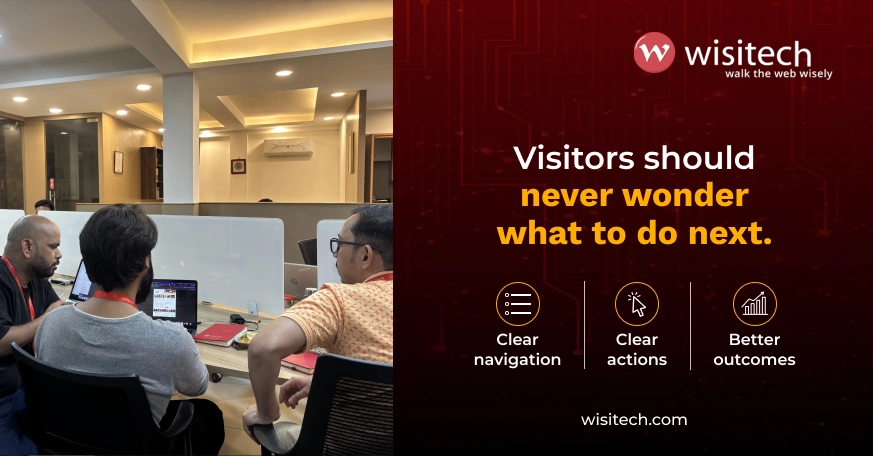
Visitors should never have to guess where to click next or struggle to understand navigation. Clean layouts, intuitive menus, and focused messaging reduce friction and improve user satisfaction.
Many businesses work with a professional UX design agency to simplify user journeys and improve website performance without sacrificing functionality.
3. Design around functionality and usability
A beautiful website loses value if users cannot accomplish their goals.
Every interaction should be intentional. Navigation, forms, buttons, and search functionality should work consistently across devices.
Organizations investing in UX design services often focus heavily on usability testing because small improvements in user flow can significantly impact conversions and customer satisfaction.
Your website should do more than look attractive.
Wisitech’s UX design services help improve usability, engagement, and conversions.
4. Create content for users, not search engines
Strong website design and strong content work together.
Users visit websites to solve problems, find information, or make decisions. Content should be clear, concise, and aligned with visitor intent.
In 2026, AI tools can assist content creation, but human expertise remains essential for producing trustworthy and useful information.
5. Highlight important actions and features
Users should immediately understand what your website offers.
Key services, products, and conversion points should be easy to identify. Clear calls to action, visual emphasis, and logical page structure help users move through the website confidently.
Good website design reduces decision fatigue by making the next step obvious.
6. Design for your audience
Effective websites are built around the needs of their target audience.
Design choices should reflect user expectations, industry standards, and customer behavior. A healthcare website, for example, requires a different experience than an ecommerce store.
An experienced custom website design company evaluates audience behavior before making design decisions.
7. Improve readability through typography
Typography remains one of the most overlooked aspects of website design.
Readable font sizes, proper spacing, sufficient color contrast, and clear content structure improve accessibility and usability.
WCAG 2.2 guidelines place greater emphasis on accessible digital experiences, making typography a critical component of modern website design.
8. Build mobile-first experiences
Mobile traffic continues to dominate web usage in 2026.
Responsive layouts are no longer enough. Websites must be designed with mobile interactions in mind from the beginning.
Businesses investing in UI UX design agency services often prioritize mobile usability because user expectations on smartphones continue to increase.
Mobile-first design should consider:
- Touch-friendly navigation
- Fast-loading pages
- Readable content
- Optimized forms
- Simplified user flows
9. Reduce loading times
Website speed directly affects user experience, search visibility, and conversions.
Visitors expect websites to load almost instantly. Slow websites increase bounce rates and reduce engagement.
Modern optimization strategies include:
- Image compression
- Efficient code structure
- Reduced script dependencies
- Content delivery networks
- Core Web Vitals optimization
Performance remains one of the most important elements of successful website design.
10. Test early and test often
Website design should never rely on assumptions.
Testing helps identify usability issues before they impact visitors. User testing, accessibility audits, heatmaps, and analytics can reveal opportunities for improvement.
In 2026, AI-powered testing tools are helping teams identify friction points faster, but direct user feedback remains one of the most valuable sources of insight. Whether you’re redesigning an outdated website or building a new digital experience, Wisitech can help create a website that aligns with modern user expectations, accessibility standards, and business goals in 2026. Contact our team to learn how a strategically designed website can improve user engagement, conversions, and long-term growth.
If your website gets traffic but not enough leads, the user experience may be the problem.
Wisitech’s custom website design company solutions help turn more visitors into customers.
Final thoughts
Good website design is no longer defined by appearance alone.
In 2026, successful websites combine usability, accessibility, performance, and user-centered design principles to create meaningful digital experiences. Businesses that prioritize user needs, follow accessibility standards like WCAG 2.2, and continuously test and improve their websites are better positioned to attract, engage, and convert visitors.
The strongest websites are not necessarily the most complex. They are the ones that make every interaction simple, useful, and intuitive.