
Search has changed more in the last two years than in the previous ten. Google AI Overviews now answer questions before users click a single link. ChatGPT and Perplexity handle millions of queries daily. And the businesses that show up in these AI-generated answers are not always the biggest or the oldest. They are the ones who have structured their content and their SEO strategy for how search actually works in 2026.
AI SEO is the practice of optimizing your website and content for both traditional search results and AI-generated answers simultaneously. For small businesses trying to compete without enterprise budgets, understanding this shift is not optional. It is the difference between staying visible and being filtered out of the conversation entirely.
This guide breaks down what SEO services for small business actually look like in 2026, what AI gets right, where it still falls short, and what your business needs to do to compete in a search landscape that is no longer just about ranking on page one.
How AI has changed search in 2026
The old SEO model was straightforward. Write content, target keywords, earn backlinks, rank on page one, and get clicks. That model still works. But it is no longer the whole picture.
In 2026, search results for most queries will now include AI Overviews at the top of the page, summarising answers directly from crawled content. Users increasingly get their answer without clicking through at all. At the same time, platforms like ChatGPT and Perplexity are handling search queries that would previously have gone entirely to Google.
For small businesses, this creates two simultaneous challenges. First, traditional organic clicks are declining on informational queries because AI answers them before the user reaches your result. Second, if your content is not structured in a way that AI systems can parse, extract, and cite, you are entirely invisible in this new layer of search.
In 2026, 92% of marketers say they are optimizing for both traditional and AI-powered search. 24% are actively restructuring their content strategy for generative AI results. The gap between businesses that have adapted and those that have not is widening quickly.
The real advantages of AI in SEO
1. Smarter keyword and content strategy
AI tools have made keyword research and content gap analysis dramatically faster and more accurate. Platforms like Semrush and Surfer SEO now use AI to identify not just which keywords a business should target, but also which topics it needs to cover to establish genuine topical authority in its niche.
For small business SEO, this matters because small businesses typically cannot afford to produce content at scale. AI helps prioritize: what to write first, which gaps competitors have left open, and how to structure content so search engines understand it deeply rather than just matching keywords superficially.
2. Automation of time-consuming tasks
SEO has always involved a significant volume of repetitive work: monitoring rankings, auditing technical issues, checking for broken links, analyzing competitor backlinks, and reviewing page performance. AI automates most of this.
For a small business owner or a lean marketing team, this is genuinely valuable. Tasks that previously required hours of manual work or expensive specialist tools now run automatically in the background, surfacing only the issues that need attention. This frees up time for strategic work that actually moves the needle.
3. Precision in understanding search intent
Modern search engines do not just match keywords. They interpret what the user actually wants to accomplish. AI has made intent detection far more sophisticated in 2026.
This means content that directly and completely answers a question is rewarded, regardless of how many times it uses a target keyword. For small businesses, this somewhat levels the playing field. A well-structured service page that clearly explains what you do, who you help, and what results you deliver can outperform a larger competitor’s page that is technically optimized but vague in its actual answers.
4. AI Overviews and generative engine optimization
The most significant opportunity in 2026 is to appear in AI Overviews and be cited by platforms like ChatGPT and Perplexity. This is where generative engine optimization (GEO) comes in. GEO is the practice of structuring your content so that AI-powered search platforms cite it when answering user queries.
Research shows that pages optimized for GEO see up to 40% higher AI search visibility. The principles are practical: answer questions directly at the top of each section, use clear headings that match how people ask questions, include schema markup so AI systems can parse your content accurately, and build topical depth by covering a subject comprehensively rather than superficially.
For small businesses, an AI Overview citation on a competitive query can deliver visibility that previously required months of link building. Early movers are establishing authority in AI search before the space becomes saturated.
Not sure if your business is showing up in AI search results?
Wisitech helps small businesses and agencies get found where it matters most, traditional search and AI platforms.
The drawbacks of AI in SEO
1. AI-generated content is a double-edged sword
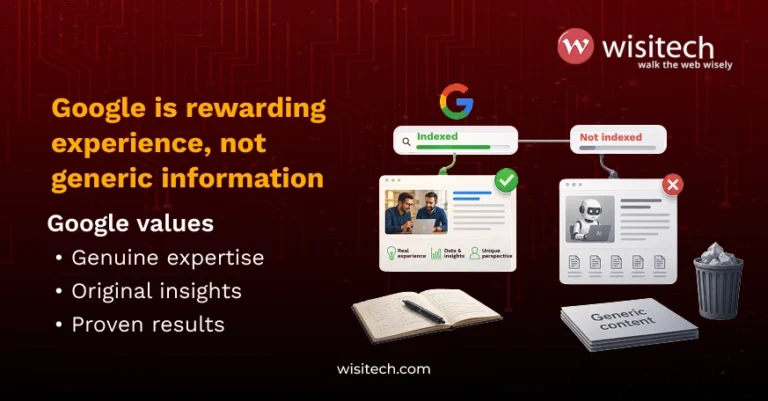
AI writing tools have made content production faster than ever. That is also the problem. Search results in 2026 are flooded with AI-generated content that is technically correct, thoroughly keyword-optimized, and completely indistinguishable from everything else. Google’s quality systems have become increasingly sophisticated at identifying content that was produced to rank rather than to genuinely help.
For small businesses, the risk is real. Using AI to produce bulk content without proper editing, fact-checking, and a human perspective is increasingly likely to result in Google treating it as low quality, regardless of how well it is structured. The competitive advantage now belongs to businesses that use AI to assist human-led content creation, not to replace it.
2. Technical requirements have increased
AI-powered search has raised the technical baseline for visibility. In 2026, technical SEO services cover more ground than they did even two years ago. Your site now needs to satisfy not just Google’s crawler but also GPTBot, ClaudeBot, and Perplexity’s crawler, all of which index your content for AI-generated answers.
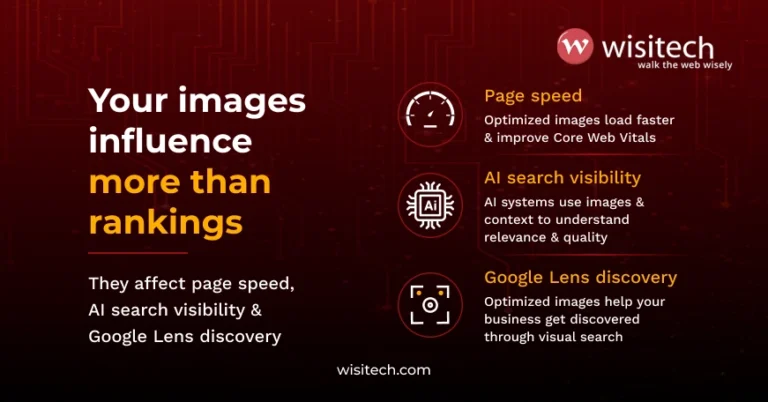
72% of first-page results now use schema markup, making it effectively mandatory for competitive rankings. Core Web Vitals (LCP under 2.5 seconds, INP under 200ms, CLS under 0.1) remain a direct ranking signal, and only 54.6% of websites currently pass all three. If your site is slow, disorganized, or blocking AI crawlers through legacy robots.txt configurations, your content simply will not be cited, regardless of how good it is.
3. Local visibility requires more active management
For small businesses that rely on local customers, the AI shift has created a new layer of complexity. Local SEO services in 2026 need to account for AI Overviews pulling local business information from Google Business Profiles, structured data on your website, and third-party
citations simultaneously. Inconsistencies across these sources, slightly different business names, outdated addresses, or missing phone numbers, cause AI systems to either surface inaccurate information or exclude your business entirely from local AI results.
The businesses winning in local AI search in 2026 are those with complete, consistent, and regularly updated business information across every touchpoint, combined with genuine reviews that give AI systems confidence signals about quality and relevance.
4. Cost and expertise barriers
The tools and expertise required for effective AI SEO are more expensive and more specialized than basic SEO was two years ago. AI-powered platforms like Semrush, Ahrefs, and Surfer SEO have increased pricing. GEO strategy requires understanding how language models parse content, not just how Google’s algorithm ranks pages. Schema markup implementation requires developer involvement for anything beyond basic configuration.
For small businesses, this is where the investment case for professional SEO support becomes clearest. The cost of getting AI SEO wrong, producing content that gets flagged as low quality, blocking AI crawlers inadvertently, or missing the GEO opportunity entirely, is higher in 2026 than it has ever been.
AI SEO strategy for small businesses in 2026: what actually works
The businesses seeing the strongest results from SEO services for small business in 2026 are following a consistent set of principles. None of them requires an enterprise budget. All of them require deliberate execution.
Structure content for direct answers
AI systems extract answers from content that leads with a clear, direct response. Start every section with a concise answer to the question the heading implies. Explain, expand, and provide context after. Pages written this way are consistently more likely to appear in AI Overviews and be cited by ChatGPT and Perplexity.
Build topical depth, not just keyword coverage
A single blog post targeting one keyword no longer builds authority the way it once did. AI evaluates topical completeness. A business that covers every meaningful angle of a subject, from beginner questions to advanced implementation, earns more trust from both traditional search and AI systems than a site with dozens of shallow posts.
For a small business, this means fewer, more comprehensive pages rather than a high-volume, thin-post approach.
Fix your technical foundation before investing in content
Content investment delivers far less return when the technical foundation is broken. Before producing new content, audit for: AI crawlers blocked in robots.txt, pages failing Core Web Vitals, missing or incorrect schema markup, slow server response times, and canonical tag errors that create duplicate content. These issues suppress everything built on top of them.
Treat your Google Business Profile as an SEO asset
For local businesses, a complete and regularly updated Google Business Profile is now one of the most direct inputs into AI-generated local answers. Business category, service descriptions, opening hours, photos, and review responses all feed into how AI systems understand and present your business. Neglecting it is no longer a minor oversight. It is a meaningful gap in your local AI search presence.
Use AI tools to assist, not replace, human-led SEO
The most effective approach in 2026 uses AI tools for research, analysis, and content structuring, while keeping human expertise in charge of strategy, brand voice, and the judgment calls that AI cannot make reliably. AI that operates without editorial oversight produces content that blends into the noise. AI combined with experienced SEO professionals produces content that stands out.
How Wisitech approaches SEO for small businesses
At Wisitech, we have been helping businesses grow through search for 27 years. The fundamentals have not changed: understand what your customers are looking for, make it easy for search engines to find and trust your content, and build authority through genuinely useful information. What has changed is the technical complexity of doing all of that in a search landscape dominated by AI.
Our SEO services for small business are built around the full picture: technical foundations that satisfy both traditional crawlers and AI systems, content strategy that builds topical authority rather than just chasing keywords, local optimisation that ensures your business appears correctly in AI-generated local results, and GEO implementation that gives your content the best chance of being cited by ChatGPT, Perplexity, and Google AI Overviews.
We do not use AI to replace strategy. We use it to sharpen our strategy, accelerate our analysis, and execute more precisely. The thinking, the direction, and the accountability remain with our team.
27 years. 2,500+ projects. Fortune 500 experience.
Ready to show up where your customers are actually searching?
Wisitech builds AI SEO strategies for small businesses that work across Google, AI Overviews, and beyond.
Final thoughts
AI has not made SEO simpler. It has made it more layered. Traditional rankings still matter. But appearing in AI Overviews, being cited by conversational search platforms, and having a technical foundation that AI crawlers can parse properly are now equally important parts of a complete search strategy.
The businesses that will struggle in 2026 are those that are still treating SEO the way it worked in 2021: keyword targeting, basic on-page optimization, and occasional blog posts. The businesses that will grow are those that have updated their strategy for how search actually works now.
The good news for small businesses: the AI shift rewards quality, clarity, and genuine expertise. These are things that do not require an enterprise budget. They require the right approach and consistent execution.