
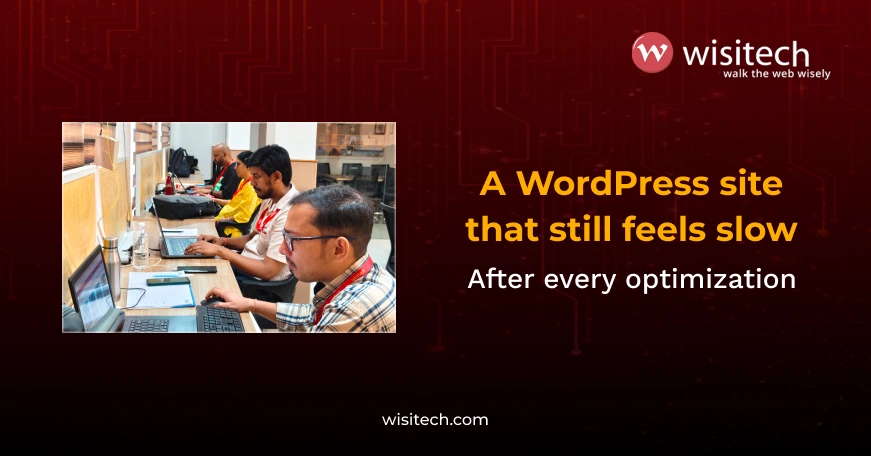
If you are dealing with a slow WordPress site after optimization, it can feel like you have already done everything right.
Images are compressed. Caching is enabled. Plugins are installed. Yet the site still feels delayed, especially on mobile or during high traffic. Visitors hesitate, interactions lag, and conversions do not reflect the effort you have put in.
This is where most businesses hit a wall. The issue is no longer basic optimization. It is how the entire system works together. For many, this is the point where structured custom WordPress development services become necessary to move forward.
Why a WordPress site can still feel slow after optimization
Performance issues rarely show up as complete failures. Instead, they appear as small delays that add up.
A page may load visually, but clicking a button takes a moment. Scrolling feels slightly heavy. Forms respond more slowly than expected. These are subtle problems, but they directly impact user behavior.
In 2026, this matters more than ever because search engines and users both prioritize responsiveness, not just load speed.
Core Web Vitals 2026: the shift from load time to interaction
Google’s performance benchmarks have evolved. It is no longer enough for a page to load quickly. It also needs to respond instantly.
The three key metrics are:
- Largest Contentful Paint (LCP)
- Cumulative Layout Shift (CLS)
- Interaction to Next Paint (INP)
INP is now critical. It measures how quickly your site reacts when a user interacts with it.
Many websites that appear optimized still fail here. That is why performance improvements often require custom WordPress development rather than additional plugins.
What is actually slowing your site down
Hosting that cannot support growth
A common issue is infrastructure. Hosting that worked in the early stages often struggles as traffic, content, and features increase.
Even after optimization, slow server response times create delays across the site. This is why businesses working with a WordPress development company often see immediate gains after upgrading their hosting environment.
Incomplete caching strategy
Most WordPress setups rely on page caching alone. That only solves part of the problem.
Dynamic elements such as logged-in sessions, carts, or personalized content still rely on repeated database queries. Without object caching, this creates unnecessary load.
Adding Redis changes how data is served, making repeat requests significantly faster. For businesses using custom web development services, this is a foundational requirement.
Plugin overload and conflicts
Plugins are added over time, not all at once. A tool for analytics, another for marketing, another for performance.
Eventually, they begin to overlap or conflict. Instead of improving speed, they create inconsistencies and delays.
Cleaning this environment is not about removing everything. It is about keeping only what supports performance and business goals. This level of clarity is often achieved with the help of a web application development company.
JavaScript blocking interaction
One of the biggest reasons sites feel slow today is not loading time but interaction delay.
Heavy scripts, especially third-party tools, prevent the browser from responding quickly. Even when the page looks ready, it cannot react instantly.
Improving this requires prioritizing essential scripts and deferring everything else. This is rarely handled effectively through plugins alone.
Database inefficiencies over time
WordPress databases grow quietly. Old revisions, expired data, and leftover plugin records accumulate.
As the database grows, queries take longer to execute. This affects both frontend performance and backend usability.
At this stage, performance improvements require a structured approach, similar to what is done in custom web portal development environments.
What actually works in 2026
Fixing a slow WordPress site is not about adding more tools. It is about aligning every layer of the system.
High-performing websites today rely on a few key principles.
They use hosting environments designed for performance, often built on LiteSpeed or optimized cloud stacks. These setups handle traffic spikes without slowing down.
They implement complete caching strategies, combining page caching with object caching through Redis. This ensures both static and dynamic content load efficiently.
They maintain a clean plugin environment where every tool has a clear purpose. Anything unnecessary is removed.
They optimize images using modern formats like WebP or AVIF and ensure only essential content loads first.
They manage scripts carefully so that user interaction is never delayed.
This is the level of performance expected from modern web portal development services, where speed is built into the architecture rather than added later.
Updated plugin stack for performance-focused sites
Instead of using multiple overlapping tools, a focused setup delivers better results.
LiteSpeed Cache is ideal for servers that support it, offering server-level caching. For other setups, WP Rocket provides a strong alternative.
Redis Object Cache is essential for handling dynamic data efficiently.
ShortPixel or Imagify helps deliver optimized images in next-generation formats.
Perfmatters allows better control over scripts, which is critical for improving interaction speed.
WP-Optimize keeps the database clean and efficient over time.
This combination supports performance without creating unnecessary complexity.
If your site is still slow after multiple fixes, the problem runs deeper than plugins.
Wisitech’s WordPress development services identify and resolve real performance bottlenecks without disrupting your site.
When basic optimization is no longer enough
There comes a point where further improvements require more than adjustments.
If your site slows down during traffic spikes, struggles with dynamic content, or fails Core Web Vitals despite multiple fixes, the underlying structure needs attention.
This is where businesses benefit from working with a web development company that can address performance at both the infrastructure and code level.
For more complex platforms, this may involve custom web development services or even a full-scale approach similar to a web application development company, where performance is engineered from the ground up.
What improvement should feel like
When performance is handled correctly, it does not draw attention.
Pages respond instantly. Navigation feels smooth. Mobile users stay engaged. The experience feels natural, without delays or friction.
This is what users expect, and it is what high-performing websites consistently deliver.
Ready to fix your WordPress performance for good?
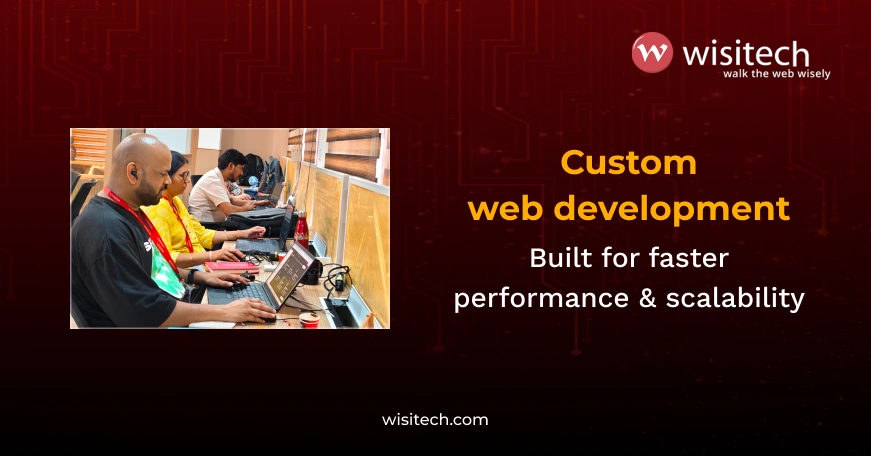
If your website still feels slow after multiple fixes, continuing with small adjustments will only delay results.
Wisitech works with businesses that need stable, scalable performance backed by real engineering. From infrastructure upgrades to code-level optimization, the focus is always on long-term results.
Whether you need custom web development services, performance-focused architecture, or a reliable technical partner, our team can help you move forward with confidence.
Connect with our experts and turn your website into a faster, conversion-focused platform.
Final thoughts
A slow WordPress site after optimization is not unusual. It is a sign that the problem goes deeper than surface-level fixes.
With the right combination of infrastructure, caching, and technical strategy, performance becomes consistent and reliable.
At that point, your website stops holding you back and starts supporting growth in a meaningful way.